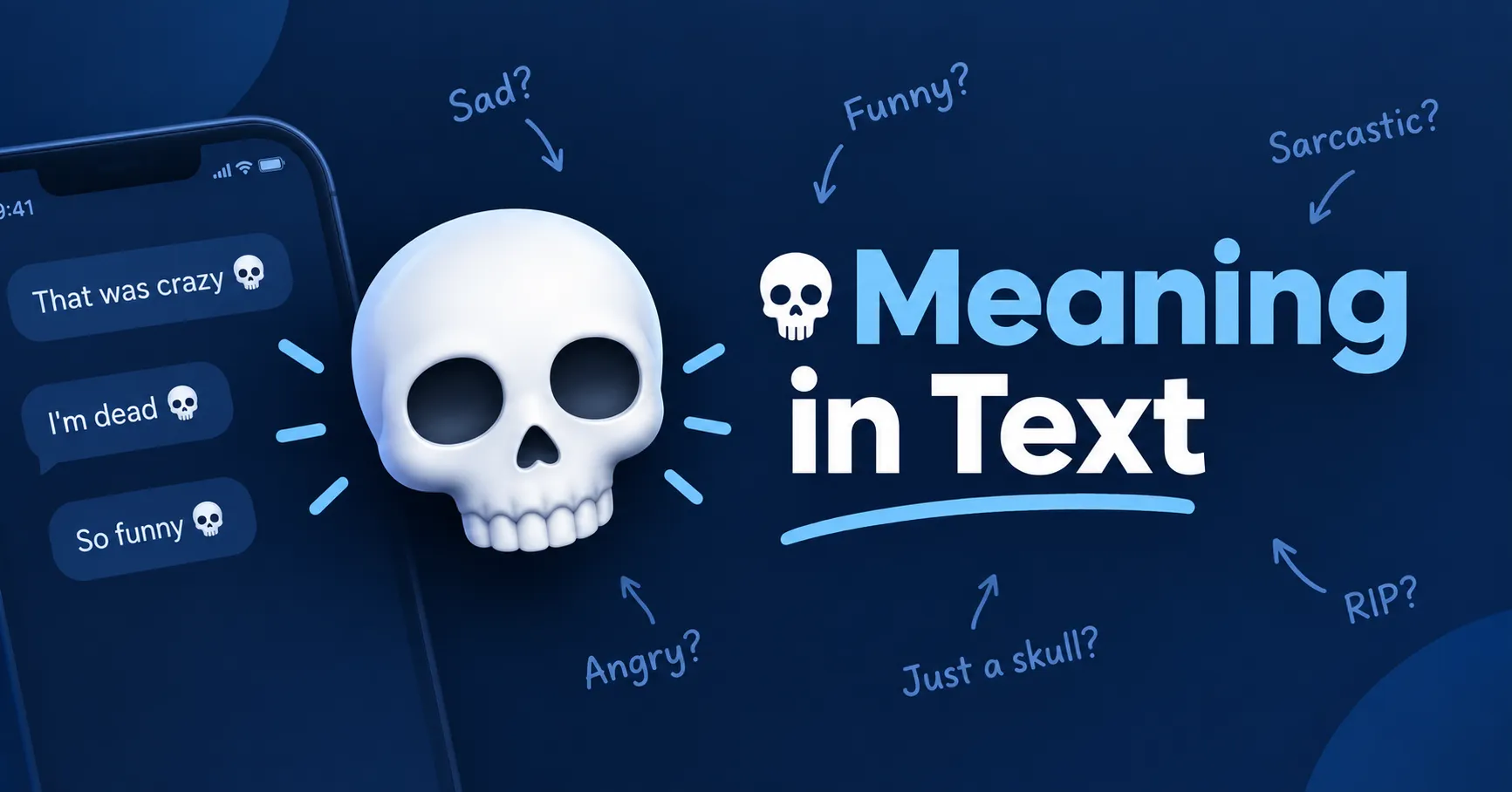
☠️ Meaning in text usually comes down to one thing: danger. The skull and crossbones emoji (☠️) is a warning symbol, standing for death, poison, or something deadly. It’s often used seriously, but sometimes it’s used for dark, dramatic humor too.
It’s easy to mix ☠️ up with the plain skull emoji (💀), which usually means someone is laughing so hard they feel “dead.” They look almost the same. They don’t get used the same way at all.
In this guide, you’ll get the full ☠️ meaning in text, learn how to read the tone behind it, and know when it’s smarter to leave it out of a message. We’ll also cover the one thing most guides skip: the real difference between ☠️ and 💀.
☠️ Meaning in Text: The Quick Answer
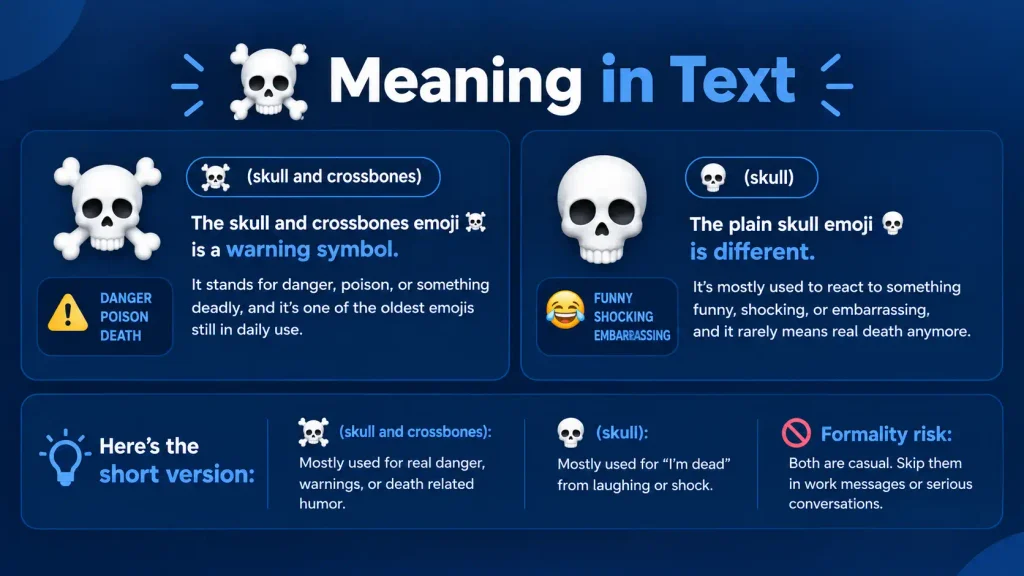
The skull and crossbones emoji ☠️ is a warning symbol. It stands for danger, poison, or something deadly, and it’s one of the oldest emojis still in daily use.
The plain skull emoji 💀 is different. It’s mostly used to react to something funny, shocking, or embarrassing, and it rarely means real death anymore.
Here’s the short version:
- ☠️ (skull and crossbones): Mostly used for real danger, warnings, or death related humor.
- 💀 (skull): Mostly used for “I’m dead” from laughing or shock.
- Formality risk: Both are casual. Skip them in work messages or serious conversations.
☠️ vs 💀, What’s the Real Difference?
These two emojis look alike, but they carry different meanings. Mixing them up is the most common mistake people make.
The ☠️ emoji shows a skull sitting above two crossed bones. That design comes from old warning signs and pirate flags. It was approved back in 1993, and people tend to use it with a heavier or more dramatic tone than its plainer cousin.
The 💀 skull emoji is just a plain white skull with no bones. Phones and apps added it later, in 2010. You’ll see it almost every day online, in comments, group chats, and captions, whenever something is funny or wild.
| Symbol | Literal Meaning | Modern Meaning | Common Platform | Formality Risk |
| ☠️ | Death, danger, poison | Dark humor, dramatic warning | Twitter/X, gaming chats | High, avoid at work |
| 💀 | Death (rarely used this way now) | Laughing hard, shock, embarrassment | TikTok, Instagram, texts | High, avoid at work |
Where the ☠️ Symbol Came From
Before it became internet shorthand, the skull and crossbones meant one simple thing: death. It has stood for death and mortality for hundreds of years, and you’ll still see it used that way in serious posts or news stories.
The ☠️ symbol also doubles as a real hazard warning. You’ve probably seen it on bottles of chemicals or cleaning products. It’s telling you: don’t touch this, don’t drink this.
Skull symbols carved onto old tombstones are called memento mori, a Latin phrase that means “remember you will die.” Artists used this image for centuries as a reminder that life is short. Pirates later borrowed it for their flags, hoping the sight of a skull and crossbones would scare other ships into surrendering without a fight.
You’ll also see ☠️ show up every October, paired with ghosts, pumpkins, and other Halloween symbols. That’s one of the rare times it still leans hard on its original, literal meaning. Knowing this backstory makes the ☠️ meaning in text far easier to place whenever it shows up in a message.
The Unicode Consortium is the group that approves every new emoji for phones and computers worldwide, and it added ☠️ in 1993, well before 💀 arrived in 2010. Emojipedia, the most-cited reference for emoji meanings online, tracks and confirms these official release dates.
When ☠️ Means Real Danger vs. Dark Humor
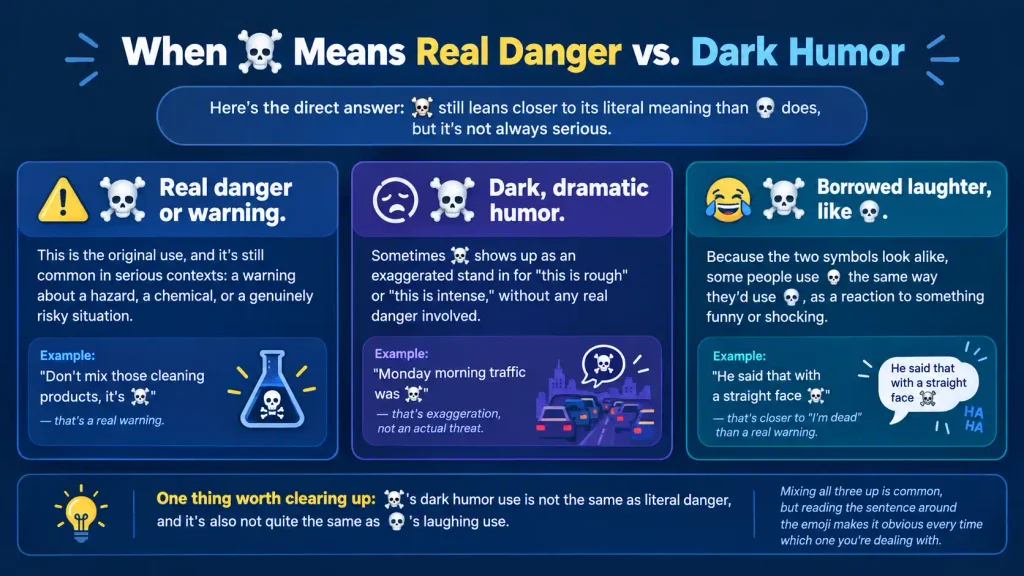
Here’s the direct answer: ☠️ still leans closer to its literal meaning than 💀 does, but it’s not always serious.
Real danger or warning. This is the original use, and it’s still common in serious contexts: a warning about a hazard, a chemical, a genuinely risky situation. Example: “Don’t mix those cleaning products, it’s ☠️”; that’s a real warning.
Dark, dramatic humor. Sometimes ☠️ shows up as an exaggerated stand in for “this is rough” or “this is intense,” without any real danger involved. Example: “Monday morning traffic was ☠️”; that’s exaggeration, not an actual threat.
Borrowed laughter, like 💀. Because the two symbols look alike, some people use ☠️ the same way they’d use 💀 , as a reaction to something funny or shocking. Example: “He said that with a straight face ☠️”; that’s closer to “I’m dead” than a real warning.
One thing worth clearing up: ☠️’s dark humor use is not the same as literal danger, and it’s also not quite the same as 💀’s laughing use. Mixing all three up is common, but reading the sentence around the emoji makes it obvious every time which one you’re dealing with.
How to Read ☠️ Meaning in Text
You can’t judge ☠️ by the emoji alone. The words sitting around it matter more than the symbol itself.
While researching emoji slang for guides like this one, one pattern keeps showing up: people rarely send ☠️ by itself. It nearly always follows a specific warning, joke, or reaction, and that surrounding text is what actually carries the meaning. The same ☠️ warning a friend about spoiled food would mean something completely different sitting next to a joke about a bad haircut. Scroll through enough Twitter/X threads, gaming chats, and group texts, and this pattern holds up every time: the emoji adds emotional weight, but the sentence next to it decides what that weight means.
In casual chats with friends, ☠️ after something extreme or intense almost always means dramatic exaggeration, not a literal threat. But if the message is genuinely about danger, poison, illness, or loss, take the emoji at face value; that’s exactly what it was built for.
A simple habit helps here: before you react to ☠️ in any message, reread the sentence right before it. If that sentence describes a joke, a rough day, or something dramatic but harmless, the emoji is almost certainly an exaggeration. If it describes something genuinely risky or serious, treat it with the same weight as the words around it.
☠️ Meaning in Text by Platform
The core meaning stays the same everywhere, but each platform has its own little habits.
- Twitter/X: Used to react to shocking news, intense situations, or dramatic complaints.
- Discord: Common in gaming channels, often warning about a tough boss fight or a risky move.
- TikTok: Shows up in comments reacting to something intense, shocking, or “too real.”
- Instagram: Appears in captions for edgy, Halloween, or dramatic-themed posts.
- Snapchat: Less common than 💀, usually reserved for more dramatic or spooky moments.
Is ☠️ Rude or Inappropriate to Send?
No, not in most casual settings. It only becomes a problem when the context is wrong, and knowing the ☠️ meaning in text is what tells you whether it fits or not.
It’s totally fine when: you’re warning a friend about something risky, reacting to a dramatic or intense situation, or posting something Halloween or edgy themed.
Better to avoid it when: you’re writing a professional email or work chat, discussing a real emergency or someone’s actual safety, or messaging someone who might read it as an actual threat rather than a joke.
How to Reply When Someone Sends You ☠️
If someone sends you ☠️, check first whether they mean it seriously or dramatically; the sentence around it will tell you.
If it’s clearly an exaggeration or dark humor, match the energy with something equally dramatic or a laughing reply. If it reads like a genuine warning, take it seriously and respond the way you would to any real caution; ask a follow up question if you need more detail.
☠️ vs Similar Emoji
| Emoji | Meaning | Best Use Case |
| ☠️ | Danger, dark humor | Warnings, dramatic jokes |
| 💀 | Dead from laughing, shock | Funny or shocking moments |
| 😂 | Laughing with tears | Straightforward humor |
| 🤣 | Rolling with laughter | Very funny jokes |
| 😭 | Crying, dramatic emotion | Sad or overwhelmed reactions |
| 🫠 | Melting, overwhelmed | Feeling drained or awkward |
Frequently Asked Questions
What does ☠️ mean in text? The ☠️ meaning in text usually comes down to danger, poison, or death when used literally. In casual texting, it’s often used for dramatic exaggeration too, like reacting to a rough day or an intense situation.
What’s the difference between ☠️ and 💀? ☠️ is a skull with crossed bones, used more for danger, warnings, or dark, dramatic humor. 💀 is a plain skull, used mainly for laughing or shock. They look similar but carry different tones.
Is the ☠️ emoji rude? No, ☠️ isn’t rude in casual conversations with friends. It can feel out of place in professional messages or around real emergencies, so it’s best to skip it in those settings.
What does it mean when someone sends ☠️? It usually means they’re reacting to something intense, dramatic, or risky. Look at the message right before it; that text almost always explains exactly what they mean.
Why do people use ☠️ instead of 💀? ☠️ carries a slightly heavier, more dramatic tone than 💀. People reach for it when something feels more intense than just “funny,” even if it’s still not truly dangerous.
Can you use ☠️ in a professional message? It’s best to avoid it. ☠️ is casual slang with a dramatic edge, and coworkers or clients may misread it as an actual warning or find it unprofessional.
What does it mean when someone replies with just ☠️? A single ☠️ reply usually means “that’s intense” or “that’s rough,” used as a quick, wordless way to react without writing out a full response.
Key Takeaways
☠️ meaning in text really comes down to one rule: it still leans closer to danger and warning than its lookalike, 💀, does. One carries real weight. The other is mostly about laughter and shock.
Reading either one comes down to the same habit: look at what’s around it. The words in the message will always tell you more than the symbol alone. Once you know that, ☠️ stops being confusing. It just becomes one more way people say a lot with very little.
To read more: CBH Meaning in Text: 5 Mistakes People Still Get Wrong