Introduction to Idioms for Emotions
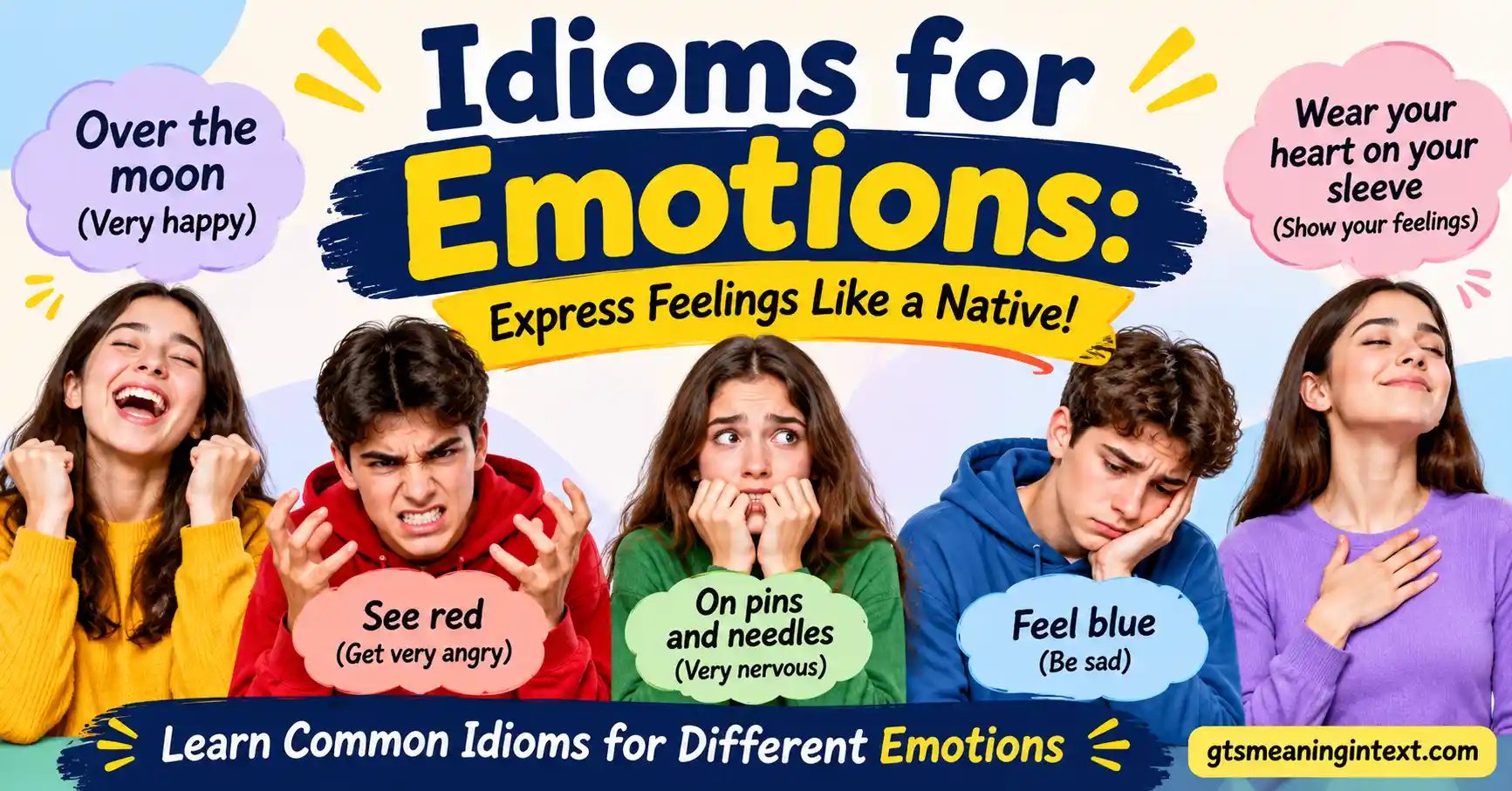
Idioms for emotions are phrases that talk about joy, sadness, anger, fear, nervousness, or mixed feelings in a short, natural way. They use pictures from the body, sky, colour, and heat, not plain words like happy or sad alone. In English, feelings are often pictured as up or down, hot or cold, light or heavy. That is why one feeling can have five phrases, and one phrase can fit two feelings.
You will find 35 phrases here, with plain meanings, natural examples, and notes on tone and use. Where an origin is uncertain, it is marked as not confirmed. Pick by the Emotion Test first, then by strength, then by time, and you will avoid most mistakes.
Quick Answer on Idioms for Emotions
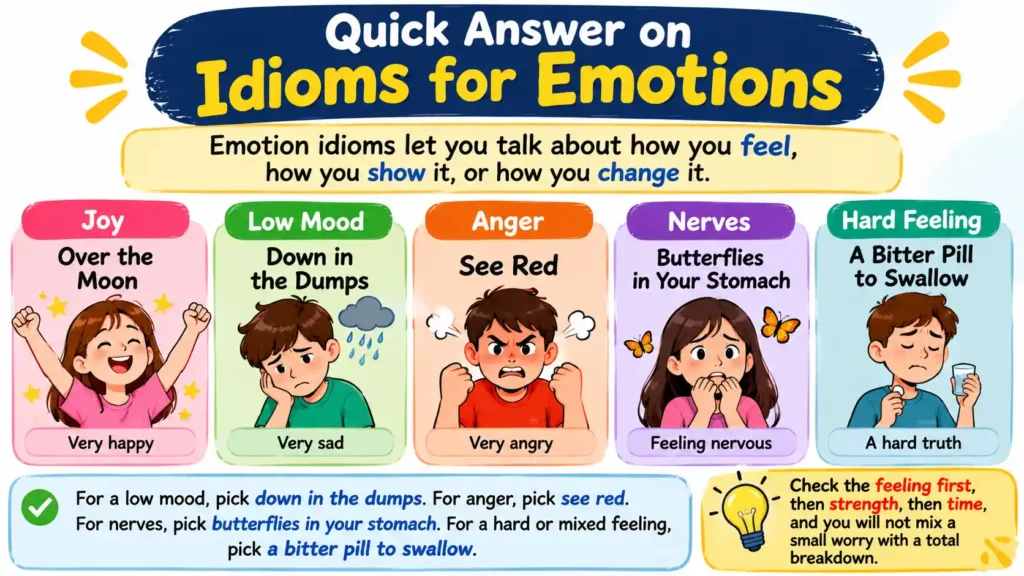
Emotion idioms let you talk about how you feel, how you show it, or how you change it. For joy, pick a phrase like over the moon. For a low mood, pick down in the dumps. For anger, pick see red. For nerves, pick butterflies in your stomach. For a hard or mixed feeling, pick a bitter pill to swallow. Check the feeling first, then strength, then time, and you will not mix a small worry with a total breakdown.
Emotion Map and Core Idioms for Emotions
The Emotion Map sorts phrases by direction and strength. Direction means up, down, out, or in. Strength means mild, strong, or total. A mild worry is not a total breakdown, and a shown feeling is not a hidden one.
| Map spot | Phrases |
| Up and light (joy) | Over the moon, on cloud nine, walking on air, on top of the world |
| Down and heavy (sadness) | Down in the dumps, feel blue, heavy heart, a broken heart |
| Hot and sudden (anger) | See red, blow your top, hit the roof, hot under the collar |
| Cold and shaky (fear) | Scared stiff, shivers down your spine, butterflies in your stomach, cold feet |
| Mixed and shown | Mixed feelings, wear your heart on your sleeve, no hard feelings, keep your chin up |
The Emotion Test asks one question: which feeling does the phrase name, or does it show, mix, or change a feeling? Each entry gives a meaning, an example, a use note, and tags for strength, direction, and time. Before means worry before an event, during means in the moment, and after means a feeling after an event.
Idioms for Emotions of Joy: I Feel Happy
Joy feels up and light in these seven phrases, from a small lift to a total high.
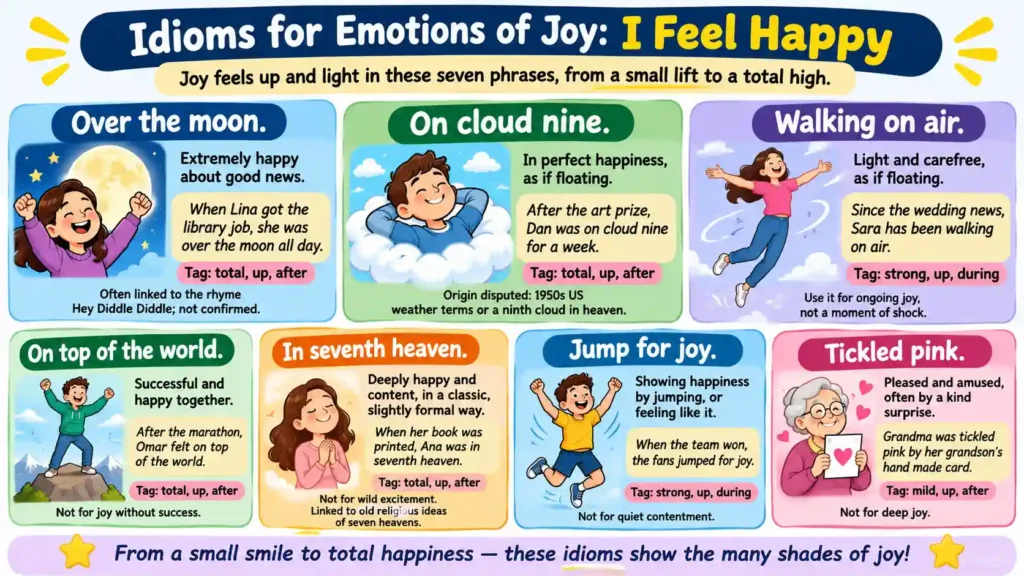
Over the moon. Extremely happy about good news. When Lina got the library job, she was over the moon all day. Not for mild cheer. Tag: total, up, after. Often linked to the rhyme Hey Diddle Diddle; not confirmed.
On cloud nine. In perfect happiness, as if floating. After the art prize, Dan was on cloud nine for a week. Not for a calm mood. Tag: total, up, after. Origin disputed: 1950s US weather terms or a ninth cloud in heaven.
Walking on air. Light and carefree, as if floating. Since the wedding news, Sara has been walking on air. Use it for ongoing joy, not a moment of shock. Tag: strong, up, during and after.
On top of the world. Successful and happy together. After the marathon, Omar felt on top of the world. Not for joy without success. Tag: total, up, after.
In seventh heaven. Deeply happy and content, in a classic, slightly formal way. When her book was printed, Ana was in seventh heaven. Not for wild excitement. Tag: total, up, after. Linked to old religious ideas of seven heavens.
Jump for joy. Showing happiness by jumping, or feeling like it. When the team won, the fans jumped for joy. Not for quiet contentment. Tag: strong, up, during.
Tickled pink. Pleased and amused, often by a kind surprise. Grandma was tickled pink by her grandson’s hand made card. Not for deep joy. Tag: mild, up, after.
Idioms for Emotions of Sadness: I Feel Low
Sadness feels down and heavy in these seven phrases, from a mild low to a total breakdown.
Down in the dumps. Sad or depressed, as if stuck low. Since his friend moved away, Tom has been down in the dumps. Not from illness. Tag: strong, down, during. Possibly from Dutch domp (haze); not confirmed.
Feel blue. Sad in a mild, quiet way. On grey winter days, I feel blue. Not for deep grief. Tag: mild, down, during.
Have the blues. A longer, deeper low mood, often tied to music. She has had the blues since the shop closed. Not for one sad hour. Tag: strong, down, during and after. A link to blue ship flags is possible; not confirmed.
Heavy heart. Sadness that feels like weight in the chest. He left the old house with a heavy heart. Not for anger. Tag: strong, down, after.
A broken heart. Deep sadness after a loss or break-up. After the friendship ended, Mia nursed a broken heart for weeks. Not for mild disappointment. Tag: total, down, after.
Cry your heart out. Crying hard and long. At the farewell, Sara cried her heart out. Not for a few tears. Tag: total, out, during.
Go to pieces. Breaking down and losing control. When the bad news came, Dan went to pieces. Not for mild sadness. Tag: total, down, during.
Idioms for Emotions of Anger: I Feel Angry or Fed Up
Anger feels hot and sudden in these seven phrases, from mild annoyance to a sudden burst.
See red. Suddenly very angry, as if red fills your eyes. When someone cut in line, Lina saw red. Not for slow annoyance. Tag: strong, out, during.
Blow your top. Losing your temper suddenly, like steam bursting out. When the bus left early again, Omar blew his top. Not for quiet anger. Tag: strong, out, during. The steam picture is a popular explanation; it’s not confirmed.
Hit the roof. Becoming extremely angry at once. When the vase broke, Dad hit the roof. Use it for a loud reaction, not calm anger. Tag: strong, out, during.
Hot under the collar. Angry or embarrassed, with heat in the neck and face. When the waiter ignored him, Tom got hot under the collar. Not for deep rage. Tag: mild, out, during.
Fed up. Annoyed or bored after too much of something. I am fed up with this rain. Use fed up with; fed up of is informal British English, best avoided in exams. Tag: mild, out, during.
At the end of your rope. Out of patience or strength. After three hours of noise, Ana was at the end of her rope. Rope is American, and tether is British. Tag: strong, down, during.
Chip on your shoulder. Holding a grudge and taking offence easily. He has a chip on his shoulder about the lost match. Not for one angry moment. Tag: mild, in, during and after.
Idioms for Emotions of Fear: I Feel Nervous or Scared
Fear and nerves feel cold and shaky in these seven phrases, from a flutter to a total freeze.
Butterflies in your stomach. A nervous flutter inside before an event. Before her speech, Sara had butterflies in her stomach. Use it for nerves or excitement, not illness. Tag: mild, in, before.
On pins and needles. Waiting nervously, unable to sit still. We were on pins and needles while the results loaded. Tag: mild, in, before and during.
On edge. Nervous, tense, and easily annoyed. Before the exam, Dan was on edge. Not for deep fear. Tag: mild, in, before.
A bundle of nerves. Very nervous all over. Before the driving test, Lina was a bundle of nerves. Not for mild worry. Tag: strong, in, before.
Scared stiff. So frightened you cannot move. When the lights went out, Tom was scared stiff. Not for mild worry. Tag: total, in, during.
Shivers down your spine. A cold, frightened, or excited feeling down the back. The old house sent shivers down my spine. Say down, not in. Tag: strong, in, during.
Cold feet. Too nervous to go through with a plan. Before the wedding speech, Omar got cold feet. Not for cold weather. Tag: mild, in, before.
Mixed, Shown, and Changed Idioms for Emotions
These seven phrases mix, show, or change feelings, and each needs a use note.
Mixed feelings. Good and bad feelings together. I have mixed feelings about moving, excited and sad at once. Tag: mixed, in, during.
Wear your heart on your sleeve. Show feelings openly. Ana wears her heart on her sleeve, so you always know her mood. Tag: shown, out, during. Shakespeare’s Othello has an early use; the jousting-favour story is unproven.
Green with envy. Very jealous of someone. When her friend won the prize, Sara was green with envy. Not for anger alone. Tag: mixed, out, during. Often linked to Shakespeare’s “green-eyed monster”; not confirmed as the origin.
A bitter pill to swallow. A hard truth that is painful to accept. Losing the final was a bitter pill to swallow. Not for medicine. Tag: mixed, in, after.
Cry over spilled milk. Worry about a past mistake that cannot be fixed. Do not cry over spilled milk; just learn and move on. Use it as advice. Tag: mixed, in, after.
No hard feelings. No grudge after a disagreement. After the game, we shook hands, no hard feelings. Not to hide real anger. Tag: changed, out, after.
Keep your chin up. Stay brave and hopeful. Keep your chin up; the next match is still to come. Use it as encouragement. Tag: changed, out, after.
Near-Synonyms, Tone, and Mistakes in Idioms for Emotions
Near-synonyms differ in strength, direction, and grammar, so check strength first, then direction.
| Phrase | Best setting | Note |
| See red | Chat, story | Never in formal writing |
| Green with envy | Chat, with care | Never aimed at a person in anger |
| Chip on your shoulder | Talking about a pattern | Describe behaviour, not a person |
| Wear your heart on your sleeve | Chat, IELTS speaking | Never in formal writing |
| Keep your chin up | Chat, work talk | Informal; use as encouragement |
- Fed up with, not of: I am fed up with this rain works everywhere; fed up of is informal British.
- Shivers down, not in: say shivers down my spine.
- Rope or tether: American rope, British tether; pick one and do not invent string.
- Under the weather: it means slightly ill, so it does not fit sadness.
Practice and FAQs About Idioms for Emotions
Practice. Fill each gap, using the Emotion Map as your clue.
- When the team won the final, Ali was over the ___.
- Missing the last bus left Sana down in the ___.
- The news made him so angry that he hit the ___.
- Before the interview, Hira had butterflies in her ___.
- I have mixed ___ about leaving my old school.
- It is done, so do not cry over ___ milk.
- He got cold ___ and skipped the stage.
- Keep your ___ up, you can try again.
Answers: moon, dumps, roof, stomach, feelings, spilled, feet, chin.
Are on cloud nine, walking on air, and over the moon the same? No. Over the moon is joy from news, cloud nine is peak, floating joy, and walking on air is ongoing lightness.
What is the difference between see red, blow your top, and hit the roof? See red is sudden anger felt inside, blow your top is a burst of words, and hit the roof is a loud reaction others hear.
Are butterflies in your stomach about nerves or excitement? Both. Before a speech, they mean nerves; before a date, excitement; and before a big match, often both, so add the cause.
Can I use emotion idioms in formal writing or IELTS? Most are fine in IELTS speaking. In formal writing, keep to a bitter pill to swallow and no hard feelings. Keep your chin up suits friendly or work messages but stays informal. Avoid see red, blow your top, hit the roof, and green with envy in formal writing.
Conclusion: Using Idioms for Emotions Well
Pick idioms for emotions by the Emotion Test, then by strength, then by time. Start by asking which feeling the phrase names, shows, or changes. Then check strength: mild, strong, or total. Then check time: before, during, or after. Watch tone, because a chat phrase like see red can sound rude in a report. Remember the fixed forms, such as fed up with and shivers down your spine. With these checks, joy, sadness, anger, and fear all find the right words, and your English will feel clear, warm, and true.
To read more: 41 Powerful Idioms for Heart with Meanings & Examples