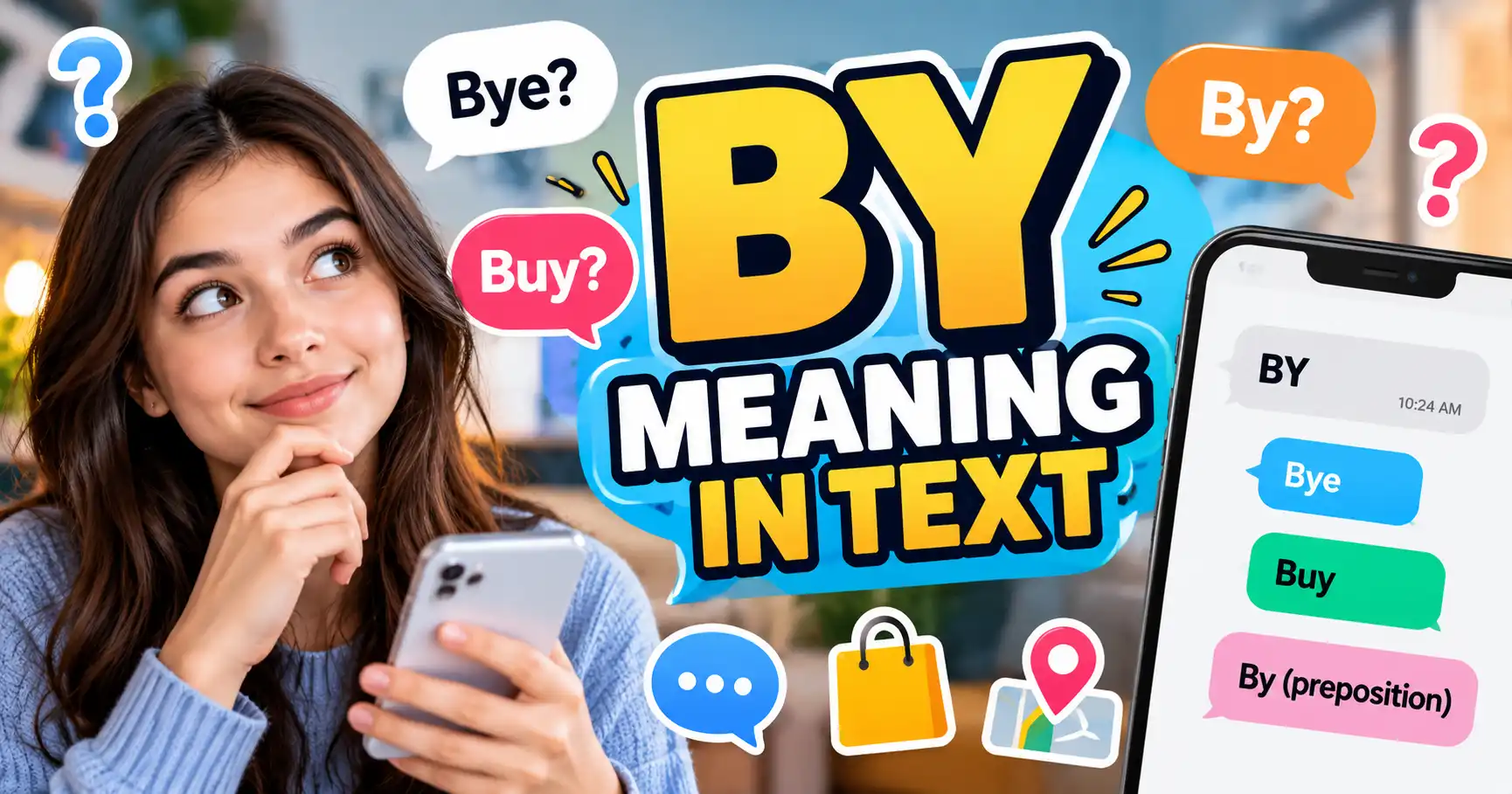
BY is simpler than most people expect, but it still confuses plenty of texters the first time they see it. If someone just sent you “BY,” you’re probably wondering what they meant. In texting, BY almost always means “bye,” a quick, casual way to say goodbye. It isn’t the everyday word “by” (as in “walk by the store”), and it isn’t some unrelated abbreviation buried in an acronym list.
Still, BY can shift depending on the sentence around it. Some texts use “BY” purely as a fast sign off. Others use it as the ordinary English word. The only way to know for sure is to look at the words nearby. Once you understand the handful of situations where “BY” pops up, you’ll be able to read it correctly every single time, without pausing to second guess a friend’s quick sign off. Let’s break down BY piece by piece, so you never have to guess again.
What Is the BY Meaning in Text? (Quick Answer)
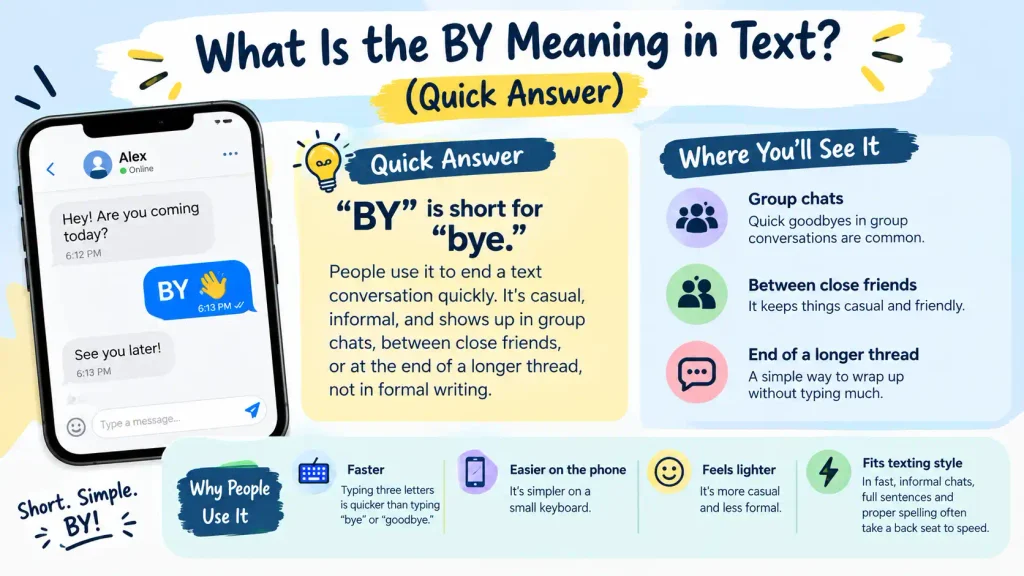
“BY” is short for “bye.” People use it to end a text conversation quickly. It’s casual, informal, and shows up in group chats, between close friends, or at the end of a longer thread, not in formal writing.
Think of “BY” as a shortcut. Typing three letters is faster than typing “bye” or “goodbye,” especially on a small phone keyboard. Some people also like the way it feels lighter and more casual than a full farewell. It fits the fast, informal rhythm of texting, where full sentences and proper spelling often take a back seat to speed.
BY Meaning in Text vs. Bye vs. Buy: Clearing Up the Confusion
These three words look and sound almost identical, and that’s exactly why BY confuses people. English has plenty of homophone words that sound the same but mean different things, and this trio is one of the most common mix ups in texting.
“BY” is the shorthand farewell we’re focused on here. Outside of texting, “by” is also a normal preposition, as in “sent by email,” but inside a casual chat it’s almost always a goodbye.
“Bye” is the full, standard spelling of the same farewell. Some people type “bye” when they want to sound a touch more polished, then switch to “BY” once they’re in a rush or texting someone they already know well.
“Buy” means to purchase something, and it sounds exactly like “by” and “bye” when spoken aloud. That’s why autocorrect and fast, careless typing sometimes swaps one for the other. A message like “I’ll BY it tomorrow” is almost certainly a typo for “buy,” not a goodbye. Whenever “BY” shows up next to shopping, money, or getting something, it’s meant to be “buy.”
| Word | Meaning | Example |
| BY | Shorthand for “bye” | “Gotta run, BY!” |
| BYE | Standard farewell | “Bye, talk later!” |
| BUY | To purchase | “I’ll buy it tomorrow.” |
This mix-up matters more than it seems, because misreading one of these three words can genuinely change how you understand a message. Mistaking a farewell for a purchase, or the other way around, can leave you replying to the wrong thing entirely. Slowing down for half a second to check the surrounding words is usually all it takes to avoid that.
BY Meaning in Text Isn’t Always Slang
Not every “BY” is slang. “By” is also a standard English word, a preposition or adverb with several everyday meanings, and understanding this side of BY keeps you from misreading formal-sounding messages. The Cambridge Dictionary lists uses that cover deadlines, methods, authorship, location, and measurement.
A few examples:
- “Please finish it by Friday” marks a deadline.
- “The letter was written by Sarah” identifies who did something.
- “I traveled by bus” describes a method.
- “She lives by the river” shows location.
- “The room is ten feet by twelve feet” measurement.
Because “by” already carries several standard meanings, don’t assume every capital “BY” in a text is slang. The words around it, and what the message is trying to say, tell you which meaning you’re looking at. Capitalization doesn’t automatically signal slang either; plenty of people type in all lowercase or all caps purely out of habit.
Real Examples of BY Meaning in Text in Conversations
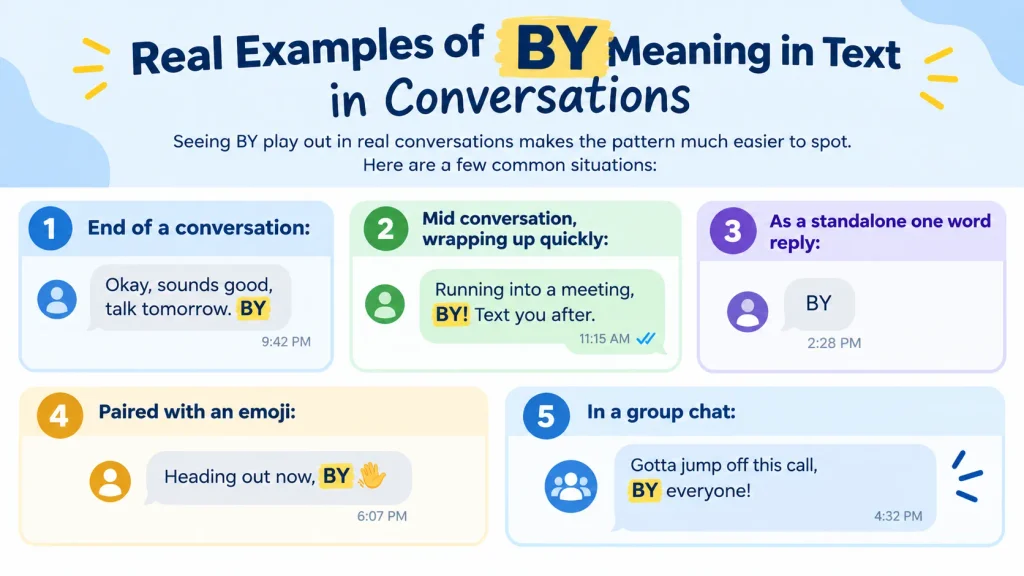
Seeing BY play out in real conversations makes the pattern much easier to spot. Here are a few common situations:
- End of a conversation: “Okay, sounds good, talk tomorrow. BY”
- Mid conversation, wrapping up quickly: “Running into a meeting, BY! Text you after.”
- As a standalone one word reply: “BY”
- Paired with an emoji: “Heading out now, BY 👋”
- In a group chat: “Gotta jump off this call, BY everyone!”
In each example, the situation makes the meaning obvious. Someone is leaving, ending a call, or wrapping up plans, and “BY” simply means “bye.” Notice, too, that none of these examples involve shopping, deadlines, or directions the classic contexts where the ordinary word “by” shows up instead. That absence is itself a clue worth paying attention to.
When Context Changes the BY Meaning in Text
When I first started paying closer attention to texting abbreviations, I noticed short forms got confusing the moment you pulled them out of context. BY is a perfect example. In one message, it’s someone’s way of saying “bye.” In another, it’s just the ordinary word “by.”
My approach now is simple: read the full conversation before deciding what it means. The words right before and after “BY” usually make the intended meaning clear. If someone is wrapping up a chat, it’s almost always their way of saying “bye.” But if the message reads something like “sent BY email,” that’s clearly the ordinary word “by,” not a farewell.
This same trick works across platforms; SMS, WhatsApp, Instagram, and Messenger all follow the same pattern. Autocorrect adds another layer of confusion, since a phone can quietly swap one word for another mid sentence. Texting language also keeps evolving; Gen Z slang and shortened spellings mean fewer abbreviations carry one single fixed meaning. Because of that, leaning on context every time rather than assuming a fixed meaning is the safest habit. If a message is still unclear after that, just asking the sender clears it up fast.
Why Autocorrect Creates the BY Meaning in Text by Mistake
Autocorrect learns from common word patterns. “By,” “bye,” and “buy” look and sound alike, so it sometimes mixes them up. A missed keystroke or a fast thumb can turn “buy” into “by,” or the other way around.
Predictive text works a little differently. Instead of correcting a mistake, it guesses what you’re about to type based on your past messages. If you text “bye” often, your keyboard may start suggesting “BY” before you finish typing, even when you meant something else entirely. This is part of why an accidental “BY” sometimes shows up as a typo instead of intentional slang; the sentence around it is usually the giveaway. If you ever send a “BY” by mistake, a quick follow-up text clears it up right away.
Other Texting Shorthand Similar to BY Meaning in Text
“BY” isn’t the only casual farewell in texting. A few related shorthand terms show up often enough that it helps to know them alongside BY:
- B An even shorter sign off used the same way as “BY,” though it’s less common and usually shows up between people who already text each other a lot.
- TTYL Stands for “talk to you later.” It hints the conversation will continue soon, rather than ending for good.
- CU means “see you.” Another shorthand farewell, often used the same way as “bye,” and it works well when plans to meet up are already set.
- L8R A stylized way of writing “later,” popular before predictive keyboards made typing full words faster.
- BTW: Worth calling out because it does not mean goodbye. It stands for “by the way,” used to add a side comment, not to end a chat.
Does the BY Meaning in Text Change on Snapchat, Instagram, or WhatsApp?
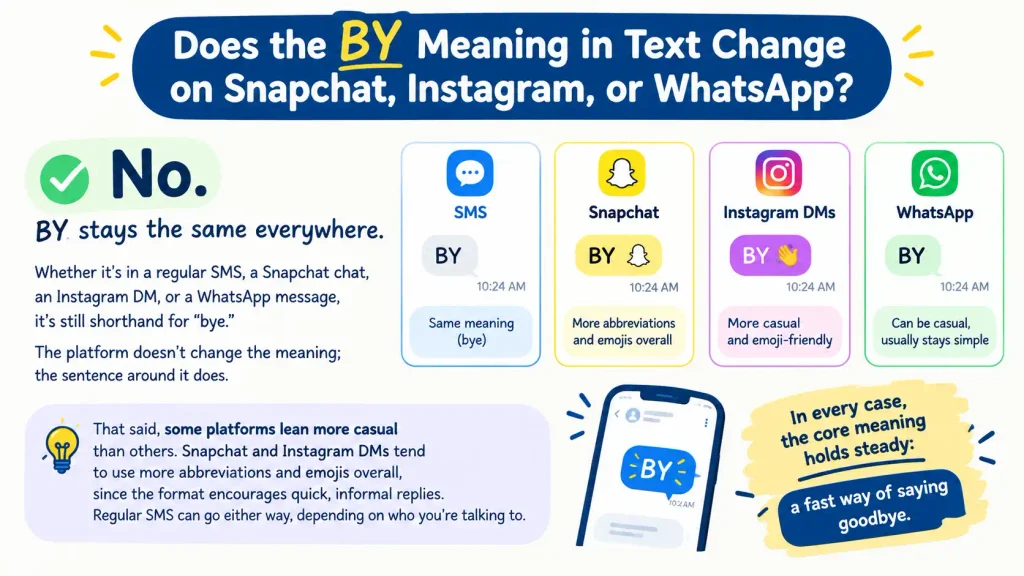
No. BY stays the same everywhere. Whether it’s in a regular SMS, a Snapchat chat, an Instagram DM, or a WhatsApp message, it’s still shorthand for “bye.” The platform doesn’t change the meaning; the sentence around it does.
That said, some platforms lean more casual than others. Snapchat and Instagram DMs tend to use more abbreviations and emojis overall, since the format encourages quick, informal replies. Regular SMS can go either way, depending on who you’re talking to. In every case, the core meaning holds steady: a fast way of saying goodbye.
How to Reply When Someone Sends the BY Meaning in Text
If someone ends a conversation with “BY,” you don’t need to overthink your reply. A short response works best, matching the same casual tone:
- “Bye!”
- “Later!”
- “Talk soon 👋”
- Just a wave emoji
If the conversation isn’t actually over, say you still need an answer to a question; it’s fine to reply with something like “Wait, before you go, one more thing!” Most people will pause before signing off for good.
FAQs About BY in Texting
What does BY mean in a text message? BY is usually “bye,” a short, casual way to say goodbye at the end of a conversation. The exact meaning depends on the sentence around it, so it’s worth checking the full message before replying.
Is BY short for bye? Yes. In most casual texts, “BY” is just a quick way to type “bye,” especially when someone is wrapping up a conversation. It’s common across SMS, WhatsApp, and Instagram DMs alike.
Does BY mean goodbye? Yes. It’s most often used as a short, informal version of “bye” or “goodbye,” particularly at the end of a chat or when someone is stepping away.
What does it mean when someone texts BY vs. BUY? “BY” is short for “bye,” a farewell. “BUY” means to purchase something. They sound identical when spoken, but the words around them make the meaning clear; for example, “sent BY email” versus “I’ll BUY it.”
Why did they text me BY? If someone ends a chat with “BY,” they’re most likely saying goodbye quickly. This often happens when someone is busy, stepping away, or just typing casually and dropping the extra letters.
Could BY be a typo instead of slang? Yes. Sometimes “BY” is an accidental typo from autocorrect or a missed key, not intentional slang. If it doesn’t fit the sentence, it’s a sign of a typo, and it’s fine to ask the sender to clarify.
BY Meaning in Text: Quick Recap
- BY is almost always “bye,” a quick, casual way to end a conversation.
- It’s easy to confuse with “buy” since they sound the same; check the sentence to tell them apart.
- “By” is also a normal English word used for deadlines, methods, authorship, location, and measurement.
- The words around “BY” matter more than the letters themselves.
- Still unsure? Just ask the sender; it’s the fastest way to clear things up.
Texting shorthand will keep changing as new habits and platforms come along, but the fastest way to read any of it, BY included, stays the same: look at what’s around it before you decide what it means. Keep that habit, and you’ll rarely misread a quick sign off again, no matter how many new abbreviations show up in your messages next.
To read more: SMS Meaning in Text : 7 Critical Facts Everyone Gets Wrong